
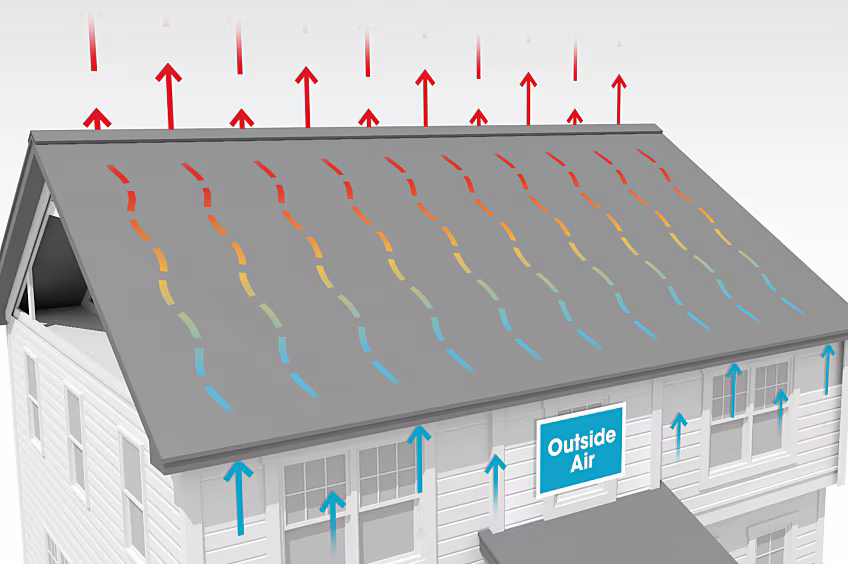
If your upstairs rooms feel much warmer than the rest of your home, your air conditioner runs constantly, or your attic feels like a sauna, the problem may be above your ceiling. Poor attic ventilation can trap heat and moisture, affect indoor comfort, and contribute to premature wear in a roofing system.
A properly designed roof assembly uses insulation, air sealing, intake ventilation, and exhaust ventilation together. For many homes, soffit vents provide low intake openings while a ridge vent or another high vent provides an exhaust path. The right solution depends on the home’s design, existing vents, insulation, roof layout, and local requirements.
Why Attic Ventilation Matters in Indiana
Indiana homes experience hot, humid summers as well as cold weather. That seasonal range makes moisture control and roof durability important parts of a complete roofing system. A dry, well-ventilated attic can help avoid moisture problems, support durability, and reduce heating and cooling costs.
Attic ventilation is not a substitute for insulation or air sealing. Ceiling air leaks can allow conditioned indoor air and moisture into the attic, while missing or blocked baffles can restrict airflow near the eaves. A professional evaluation should look at the entire attic and roof assembly rather than adding a vent without checking how the system works together.
What Can Happen When an Attic Is Too Hot or Damp?
•Premature roofing wear: Excessive heat and moisture can reduce the durability of roofing materials over time.
•Moisture damage: Persistent moisture can affect insulation, roof sheathing, and wood components, and may contribute to mold growth.
•Uneven indoor temperatures: Heat radiating from the attic can make upper rooms less comfortable.
•Higher heating and cooling demand: A poorly insulated or leaky ceiling can allow conditioned air to escape and outdoor heat to enter.
•Insulation problems: Blocked soffit openings or missing baffles can prevent insulation from performing consistently at the eaves.
Three Signs of Poor Attic Ventilation
1. Upstairs Rooms Stay Hot
If the second floor remains noticeably warmer than the first floor even when the air conditioner is running, have the insulation, air sealing, ductwork, and attic ventilation evaluated. Temperature differences can have several causes, so indoor comfort alone does not prove that ventilation is the only issue.
2. Shingles Look Damaged From the Ground
From a safe location, look for widespread curling, buckling, blistering, missing granules, or other visible changes. These conditions can result from age, weather, installation issues, or other causes. Do not climb onto the roof to investigate; schedule a professional inspection instead.
3. You See Attic Moisture or Damaged Insulation
Warning signs can include damp insulation, water staining, musty odors, frost in cold weather, or discoloration on roof sheathing. These symptoms may also point to a roof leak, plumbing issue, bathroom exhaust problem, or air leakage, so the source needs to be identified before a repair is selected.
How Balanced Roof Ventilation Works
A balanced ventilation system uses both intake and exhaust openings:
1.Outdoor air enters through soffit or eave vents near the lower edge of the roof.
2.Baffles or rafter vents help preserve an open airflow channel above the insulation.
3.Warm, humid attic air moves toward high points in the roof assembly.
4.Exhaust vents, commonly a ridge vent when the roof design allows, release air near the peak.
Intake and exhaust ventilation should be designed as a system. Installing only a high exhaust vent may not provide the intended airflow. Ventilation sizing must follow applicable building requirements and the roof’s design; local code and project-specific calculations control.
Ventilation Is Only One Part of the Solution
A durable attic also needs adequate insulation and air sealing. Air sealing limits uncontrolled movement between the living space and attic, while insulation slows heat transfer. Vent openings intended to move air, such as soffit and ridge vents, must remain open and should not be sealed accidentally.
A roofing contractor should also check whether existing gable, box, turbine, or powered vents interact properly with the rest of the system. The best vent type depends on roof shape, available intake, attic configuration, insulation, and local requirements—not on a one-size-fits-all recommendation.
When Should You Schedule a Roof and Attic Inspection?
Consider requesting an inspection if you notice:
•A consistently hot second floor or rooms that are difficult to cool.
•Visible shingle deterioration, missing granules, or recurring roof problems.
•Damp insulation, water stains, frost, musty odors, or suspected attic moisture.
•Blocked or missing soffit vents.
•A roof replacement project that does not include a review of ventilation and attic airflow.
An inspection can help distinguish ventilation concerns from roof leaks, inadequate insulation, ductwork issues, bathroom exhaust problems, or ceiling air leakage.
Protect Your Indiana Home With Allied Exteriors
Allied Exteriors is a veteran-owned roofing contractor serving Fort Wayne, Northern Indiana, and Northwest Ohio. The company offers roof replacement solutions using metal roofing and asphalt shingles and includes ridge ventilation and other roofing components where appropriate for the project.
During a roof replacement consultation, ask how the proposed system will handle intake ventilation, exhaust ventilation, insulation, flashing, roof decking, and moisture control. A complete evaluation helps ensure the recommended roofing solution fits the home instead of treating one symptom in isolation.
Allied Exteriors also offers financing options for qualifying homeowners. To discuss roof installation or request an evaluation, call (260) 797-8087 or use the contact form on the company’s website.
Is Your Attic Working Against Your Roof?
A hot or damp attic should not be ignored, but adding a vent is not always the complete answer. The right next step is a professional review of the roof, attic, insulation, air sealing, intake openings, and exhaust strategy.
If you are in Fort Wayne, Northern Indiana, or Northwest Ohio, contact Allied Exteriors to schedule a roofing consultation and learn whether your home may benefit from improved attic ventilation or a complete roof replacement.